Write a brief you can repeat
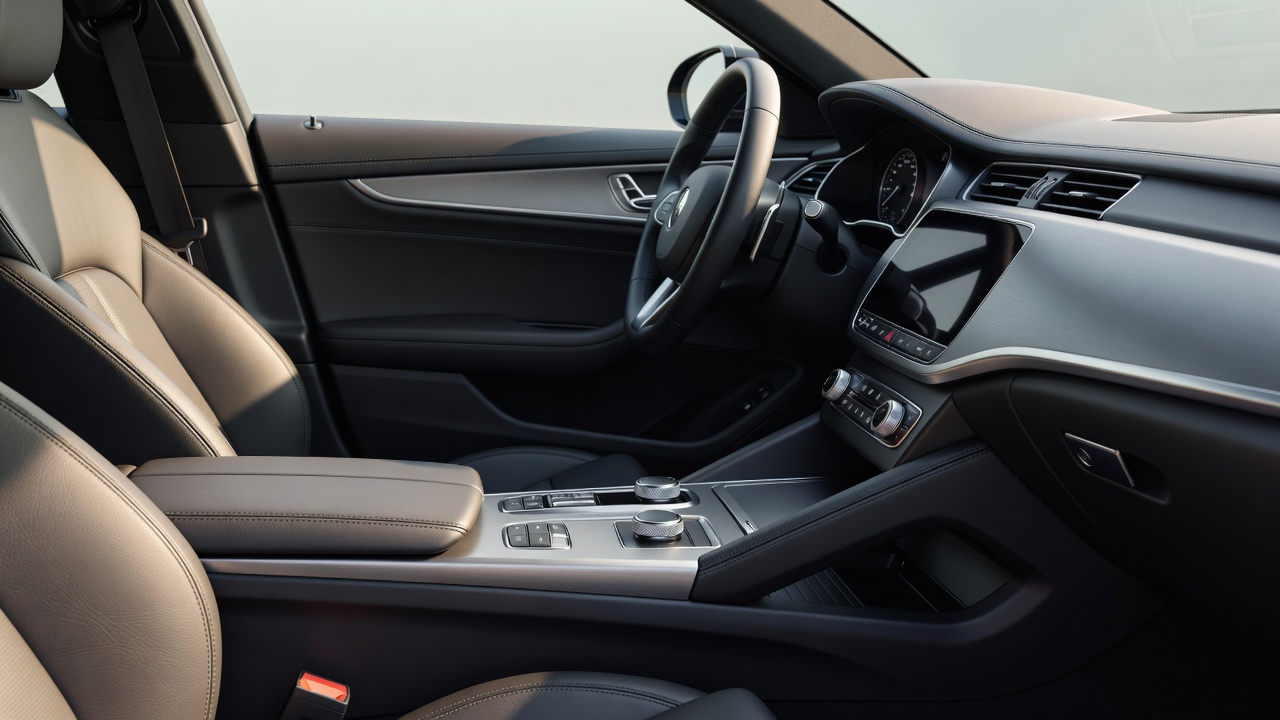
A coherent cabin usually has fewer competing ideas, not more expensive parts. Choose a dominant texture already present in the seats or dashboard. Add one supporting finish and, if needed, a small accent. A warm textile insert and a satin trim surface can feel deliberate without covering every panel.
Photograph the cabin from the driver’s normal eye position in daylight and after dark. Mark the areas you notice first. These are the places where a small change matters most. Keep factory warning symbols, readable controls and useful storage outside the visual experiment.
Separate material choice from fit
Adhesive film is useful for a reversible-looking surface change, but reversibility depends on the substrate, adhesive, heat exposure and removal method. Ageing soft-touch coatings can lift with a film. Textured plastics may not hold it reliably. Test an inconspicuous area and ask the installer what damage their process could reveal or cause.
Replacement trim can offer a more consistent edge than wrapped pieces, yet clips, locating tabs and clearances must match the exact vehicle generation. A part that resembles the original is not necessarily compatible. Never cover an airbag deployment seam, alter a restraint component or obstruct a sensor to achieve a cleaner line.
Choose by the problem
- Film: changes colour or texture; edge work and substrate condition determine the result.
- Replacement trim: changes the physical piece; exact fit and safe retention matter.
- Upholstery work: changes a contact surface; seat-mounted airbags and heating require specialist attention.
Keep ambient light below the task
Good ambient lighting should support orientation rather than compete with the road. A hidden source and a low setting usually work better than a bright exposed strip. Check reflections in the windscreen, side glass and glossy trim while seated normally. Keep light away from the instrument display and any camera used for driver monitoring.
Prefer a stable, restrained colour and a setting you can reduce immediately. Flashing effects are distracting and may create road-use issues. Product labels do not establish legality in every location. In the United States, FMVSS No. 108 concerns vehicle lighting equipment; UNECE Regulation No. 48 addresses installation of lighting and light-signalling devices in relevant approval contexts. Neither is a blanket approval for an aftermarket cabin kit.
Installation note: power and cable routing
Use the vehicle documentation and a competent automotive electrician for permanent wiring. Fuse protection, circuit capacity, cable security and appropriate connectors matter. Do not tap airbag wiring, route cables across pedals or trap them under seat runners. Confirm that the system powers down correctly and does not create a battery drain.
Give every accessory a job
A phone mount, charging pad or small display should solve a real problem. Check the mount with the device fitted, not just the empty bracket. It must remain secure without blocking the road view, a vent you rely on, an airbag zone or a control. Dashboard shapes and mounting restrictions differ, so a generic “universal” claim is not enough.
Wireless charging can generate heat, especially behind glass in direct sun. Follow the device and charger instructions, maintain ventilation and avoid tangled cables near the gear selector. Decorative dashboard objects should not become loose projectiles. If an accessory cannot be secured safely, leave it out.
Check the cabin as a working space
Before final handover, operate every affected switch, vent, seat adjustment and storage lid. Listen for rattles over an appropriate test route and inspect trim edges after the cabin has warmed naturally. Do not use concentrated heat to force a questionable installation into place.
Ask for cleaning instructions for each new surface. A product suitable for hard plastic may damage coated fabric, film or a screen. Keep the original parts where practical and photograph cable routes before panels close. That small record makes later diagnosis and reversal less uncertain.
- Controls, airbags and sensors remain unobstructed.
- No visible glare from the normal driving position.
- Wiring and mounts stay clear of moving parts.
- Materials tolerate the planned cleaning routine.