Identify every surface first
A personalised car may have several care systems on one panel: paint, protective film, a coating, replacement badges and exposed plastic. Start by recording what is installed and collecting the relevant care instructions. “Safe for cars” is too broad to establish compatibility with every material or finish.
Inspect the car when it is cool and reasonably clean. Note lifting film edges, damaged clear coat, loose trim, wheel corrosion and cracked accessories. Cleaning is a chance to spot changes early, not just remove dirt. If a surface is already failing, a stronger chemical or more friction can make the problem worse rather than solve it.
Remove contamination with less contact
Work out of direct heat where practical and follow local water-use and runoff rules. Rinse away loose grit before contact washing. Use a suitable shampoo at the specified dilution, a clean wash medium and enough rinsing to avoid dragging contamination across the surface. Do not let chemicals dry unless the product instructions explicitly call for it.
There is no single wash method that guarantees scratch-free paint. The useful principles are clean tools, controlled contact and frequent inspection. Change or clean a mitt when it becomes contaminated. Keep lower-body dirt away from cleaner upper panels and use separate equipment for wheels. Dry gently with clean, suitable towels rather than chasing every remaining droplet with pressure.
A practical basic kit
- A finish-compatible wash product and clearly marked dilution bottle.
- Clean wash media and separate wheel tools.
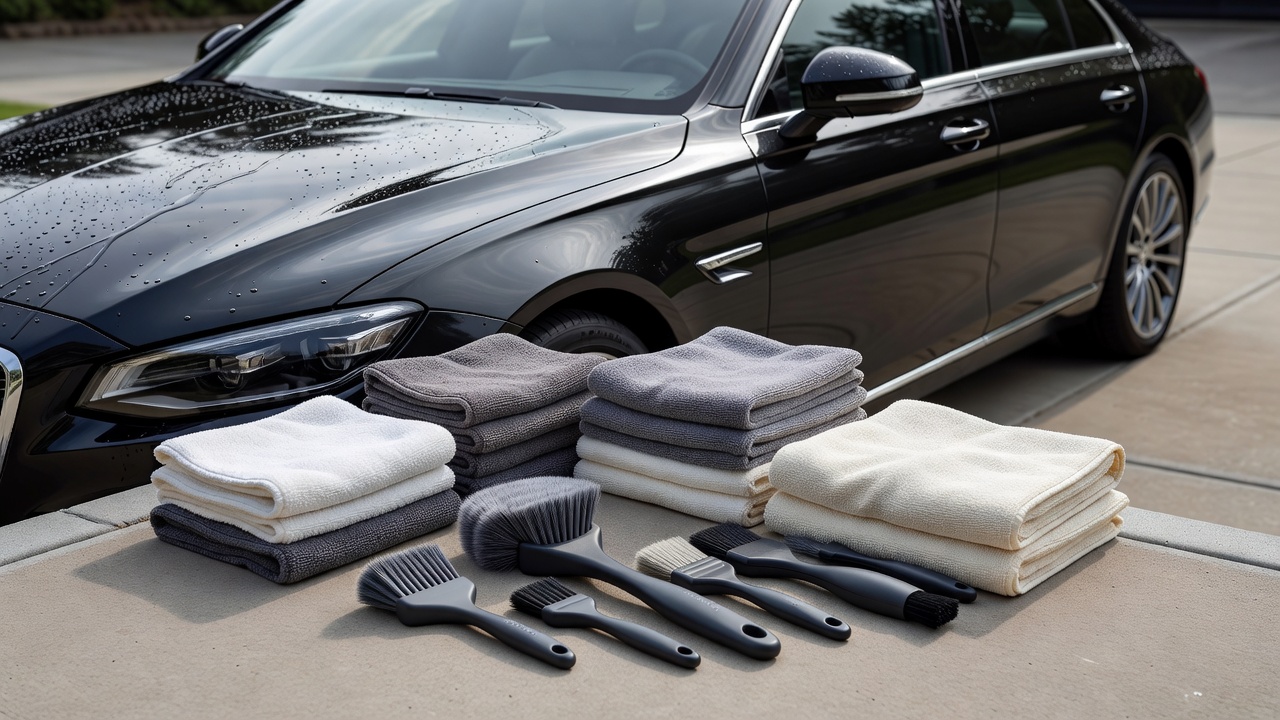
- Soft, clean drying towels stored away from grit.
- Material-specific interior cleaner and a small soft brush.
- Gloves and eye protection where the product label requires them.
Treat wheels and cabin materials separately
Wheel finishes vary. Bare metal, coated alloys, polished faces and refinished surfaces may need different products. Confirm compatibility before applying a cleaner, work on cool wheels and respect the label’s dwell time. Never assume that a strongly acidic or alkaline product is appropriate because it removes brake dust quickly.
Keep dressing off tyre tread, brake components, pedals and steering-wheel contact areas. Inside the cabin, apply cleaner to an appropriate cloth rather than flooding switches or spraying into seams. Screens, coated leather, textiles and soft-touch plastics need their own instructions. A glossy dressing on a dashboard can create unwanted reflections even when it looks tidy in a parked photograph.
Know when cleaning becomes correction
Embedded contamination may need a dedicated chemical treatment. Mechanical decontamination, such as a clay product, can mar the surface and should not become an automatic step at every wash. Test first and use the least aggressive effective approach. Matte paint and some films are especially unsuitable for ordinary polishing routines.
Polishing removes or alters surface material; it is not simply a more thorough wash. Repeated correction consumes a finite margin, and edges or repaired panels may be vulnerable. A paint thickness gauge can inform professional judgment but does not provide a complete map of remaining clear coat. Deep scratches and unknown repairs deserve assessment rather than a promise to “polish everything out.”
Workshop note: coatings are not scratch-proof
Protective products can change water behaviour and make some contamination easier to remove, but they do not eliminate washing or prevent every scratch, stain or stone impact. Follow the specific system’s preparation and maintenance instructions. Product families from Meguiar’s, Autoglym and Gtechniq differ; a brand name alone is not a compatibility instruction or a performance guarantee.
Build a routine around exposure
Adjust care to the conditions rather than a rigid calendar. Road salt, bird contamination, tree deposits and repeated outdoor parking create different demands from sheltered occasional use. Remove potentially damaging contamination promptly using a suitable gentle method; do not scrape dried deposits off a delicate surface.
Inspect film edges and exposed trim during routine washes. Keep product labels and installation records, and photograph developing issues before trying a repair. Store towels clean and discard them from paint duties if they retain grit. A simple routine performed consistently often protects a considered build better than occasional aggressive treatment.
Finally, accept normal use. Some marks will return, and repeatedly removing material to chase perfection can be a poor trade. Preserve the car’s condition, keep safety-critical surfaces clean and spend the remaining effort enjoying the choices you made.