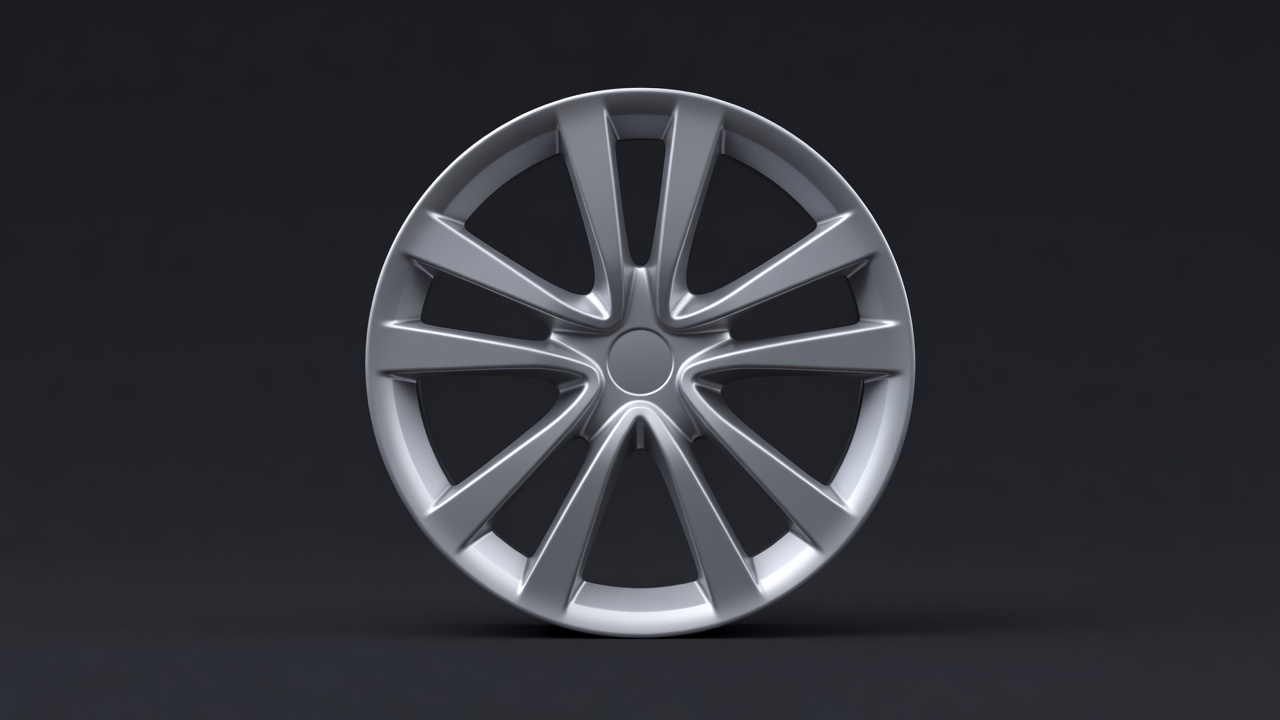
Decide what the wheel should contribute
Wheels occupy a large part of a car’s visual identity. An open spoke pattern exposes more of the braking hardware; a dense pattern creates a calmer, more solid disc. Bright finishes emphasise the wheel face, while darker finishes can reduce definition in shade. None of these effects proves a performance benefit.
Compare photographs taken at similar angles and ride heights. A heavily edited image, stretched tyre or altered suspension can make an ordinary fitment appear dramatically different. Start with the car as it stands. Choose a design that belongs with the body lines before chasing a larger diameter or a more aggressive position.
Build a complete specification
The relevant specification includes diameter, width, bolt pattern, centre bore, offset, load rating and the correct fixing seat. Offset describes the relationship between the wheel centreline and mounting face; it cannot be judged safely from appearance alone. The tyre must also be suitable for the wheel width and the vehicle’s requirements.
Ask the supplier for documentation tied to the exact wheel model and application. SAE J2530 covers aftermarket wheel performance requirements and test procedures. UNECE Regulation No. 124 concerns replacement wheels for passenger cars and their trailers in applicable approval systems. ETRTO, JATMA and ISO 4000 provide tyre-and-rim reference frameworks. A reference to a standard is not a substitute for evidence that the actual part and application comply.
- Confirm the exact model year, variant and brake package.
- Check wheel and tyre load capacity against vehicle requirements.
- Verify compatible hardware, fixing seats and centre location.
- Include tyre-pressure monitoring compatibility where fitted.
Compare the compromises, not just the size
A larger wheel with an appropriately matched lower-profile tyre may preserve a similar overall rolling diameter, but the result depends on the approved combination. It can alter comfort, impact tolerance, replacement cost and steering feel. A larger wheel is not automatically lighter, stronger or more responsive.
Wheel mass varies with design, construction and size. Compare credible specifications for the actual products, not broad claims about “forged” or “flow-formed” labels. Likewise, a wider tyre is not a universal route to more usable grip. Compound, temperature, road conditions, pressure and the vehicle setup all matter.
| Choice | Visual effect | Practical check |
|---|---|---|
| Open spokes | More visible brake hardware | Caliper clearance and cleaning access |
| Larger diameter | More wheel, less visible sidewall | Approved tyre options and impact tolerance |
| Polished face | Strong highlights | Finish-specific care and repair options |
| Darker finish | Quieter contrast in shade | How readily damage and contamination show |
Check movement, not just a parked car
A wheel that bolts on can still be unsuitable. Clearance needs checking at steering lock and through the relevant suspension movement, with realistic loading. Brake calipers, suspension parts, arch liners and bodywork all create potential conflicts. Static photographs cannot establish these clearances.
Spacers and adapters add further variables, including hardware engagement and altered positioning. Do not treat them as a universal correction for a poorly chosen wheel. Ask a qualified installer to assess the complete assembly and local requirements before purchasing. Avoid tyre stretch or body interference as a styling shortcut.
Installation note: handover checks
Use the vehicle and wheel manufacturers’ specified hardware, procedures and torque values. Confirm correct seating, balance, tyre pressure and monitoring operation. Follow the applicable instructions for any subsequent fastener check; do not substitute a generic online torque figure.
Allow for paperwork and upkeep
Roadworthiness, approval and insurance obligations depend on location and the modification. Germany’s inspection framework and the UK’s DVSA MOT process illustrate why an online seller’s “road legal” label is not enough. Passing one inspection also does not settle every approval or insurance question. Obtain advice specific to the vehicle and jurisdiction.
Finally, price the complete set: wheels, suitable tyres, sensors, mounting, balancing and any required alignment or approval work. Keep the original specification on record. Choose a finish you can clean without harsh chemicals and a design you can inspect for damage. A convincing stance should still work on the roads you use each week.